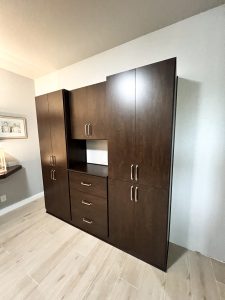
Did you know that 16 out of 34 closet organization tips focus on categorizing clothes? This shows how important it is to sort items well. If you’re wondering how to organize your closet shelves, start by planning and decluttering.
First, sort your items into keep, donate, sell, or toss piles. Choose the right storage for your clothes and accessories. Wood shelves are great for small or odd items, and clear dividers protect purses.
To keep your closet organized, set up systems that change with your needs and seasons. Use portable containers during decluttering. Also, use other parts of your home for storage, like office corners or under beds. Whether you use a closet-laundry room combo or DIY ideas, keep checking your storage methods.
Key Takeaways
- Organizing closet shelves starts with decluttering and categorizing items into keep, donate, sell, or toss.
- Utilize wood shelves for sturdy storage and clear shelf dividers for protecting purses and clutches.
- Portable storage containers and alternative home storage areas can enhance closet organization.
- Personalized closet systems that adapt to changing needs are integral for long-term organization.
- Incorporate lighting and dual-level hanging rods for maximum efficiency and visibility.
Declutter and Sort Essentials
The first step in effective closet organization is to declutter closet shelves. Allow 3 to 4 hours for this process. Start by emptying your entire closet, including clothing, accessories, and shoes. Allocate time for sorting items into keep, unloved, unneeded, and unused piles.
Commit to reducing the amount of clothing to only what you love and will use. Emotional connections to certain pieces can justify keeping infrequently used items. Implement the “one-year rule,” where clothing not worn in the past year should be discarded. Decluttering storage items such as broken hangers may free up space for functional alternatives.
- Set aside time to clean the closet and shelves before organizing the remaining items.
- Propose a system where unworn items are placed in a box for a month and then donated, sold, or discarded.
After decluttering, categorize clothing into shirts, pants, dresses, suits, etc., and further enhance the closet’s efficiency by color-coordinating each category. This approach simplifies daily routines, makes decisions quicker, and eases the packing process for travels.
Consider using practical solutions like PODS containers for off-site storage during the decluttering process. Donating unused items to charities such as Goodwill, the Salvation Army, or local shelters is a recommended practice.
Overall, following these best closet organization tips will alleviate daily frustrations and decision fatigue when selecting outfits. Thus, by embracing diy closet shelves organization strategies, one can transform a cluttered wardrobe into a streamlined, functional space.
Maximize Your Shelf Space
To make the most of your closet shelf space, plan your shelves wisely. Use tools like shelf dividers and labels. Adding bins, baskets, and hanging organizers can make your closet more functional. This way, each item has its own spot, keeping your closet tidy.
Adjustable shelves are great because you can change them as needed. Using closet doors for hanging bags also saves space. Plus, using the same hangers and stacking items vertically can make your closet more organized.
- Invest in modular closet systems with adjustable shelves, hanging rods, and drawers for a tailored fit.
- Use stackable bins on high-up shelves to store seasonal items and less frequently used belongings.
- Employ the space behind closet doors by attaching hanging shoe organizers or storage bags.
- Add a second hanging rod below the main one to double the available hanging space.
- Install LED strip lights or motion-sensor lights to improve visibility in walk-in closets, making it easier to find what you need.
Divide your closet into zones with dividers. This helps keep clothes organized by type, length, and color. For small items, use shoeboxes or bins. You can also add more hanging space with tension rods or special hangers for accessories.
If you’re on a budget, try using command hooks for accessories. DIY drawer dividers can also help organize small items. Cascading hangers are another smart way to use space, allowing you to hang more clothes vertically.
Conclusion
Organizing closet shelves is more than just tidying up. It needs ongoing effort to keep the system working well. Regular decluttering sessions help keep your closet organized by removing items you don’t need.
Using adjustable storage, like clear bins or shelves, helps your closet grow with your wardrobe. This flexibility is key for changing seasons.
Sorting clothes into Keep, Donate, and Discard piles is a smart tip. It makes sure only useful items stay in your closet. Using accessories like shelf dividers and hooks helps keep things tidy.
Having a place for everything makes finding clothes easier. This makes getting ready in the morning less stressful.
Investing in vertical storage, like high shelves and door organizers, saves space. Seasonal items stored away free up room for what you use every day. Regular cleaning out keeps your closet clutter-free.
The aim is to have a closet that’s both useful and looks good. It should make getting ready easier and less stressful. By following these tips, you can make your closet a better part of your daily life.